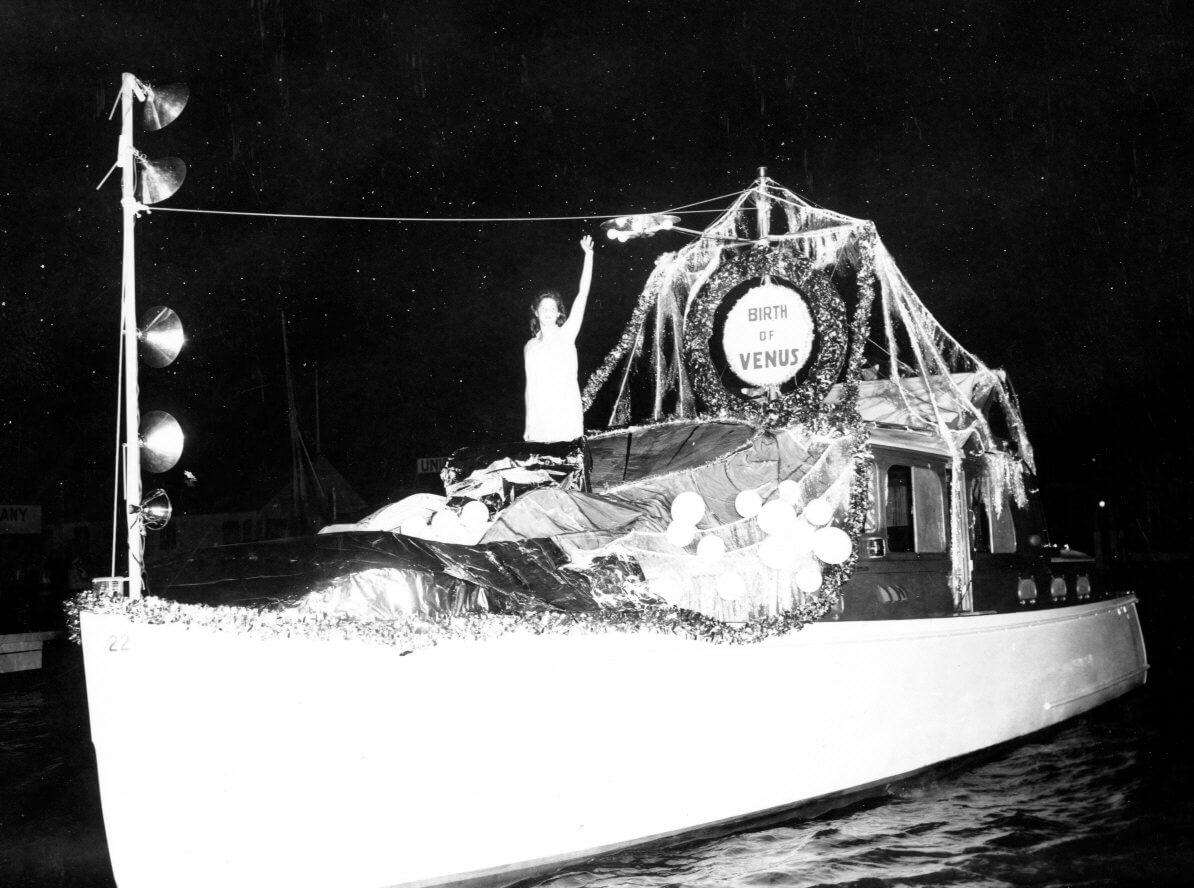
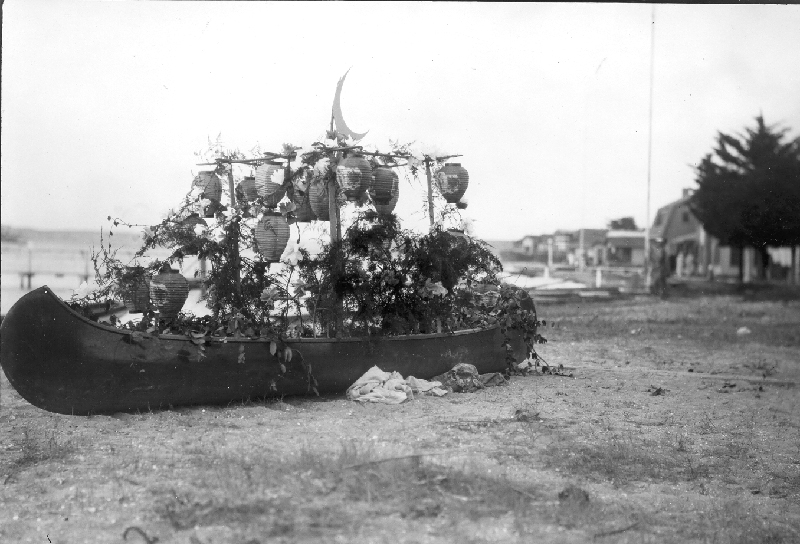
The tradition began when Italian gondolier John Scarpa took a group of visitors from Pasadena across Newport Bay in a gondola decorated with Japanese lanterns. That illuminated journey planted the seed for a celebration that would become a cherished Newport Beach tradition.
On July 4, 1908, Scarpa organized Newport Harbor’s first lighted boat parade with fellow small boat operators. Nine vessels participated: his lantern-decorated gondola led the way, followed by eight canoes.
This modest procession established Scarpa’s place in local history as the creator of the first lighted boat parade.
The event returned in 1913 as the Illuminated Water Parade. Boats were judged, and prizes were awarded for the best decorated and best lighted vessels, adding friendly competition to the waterfront celebration.
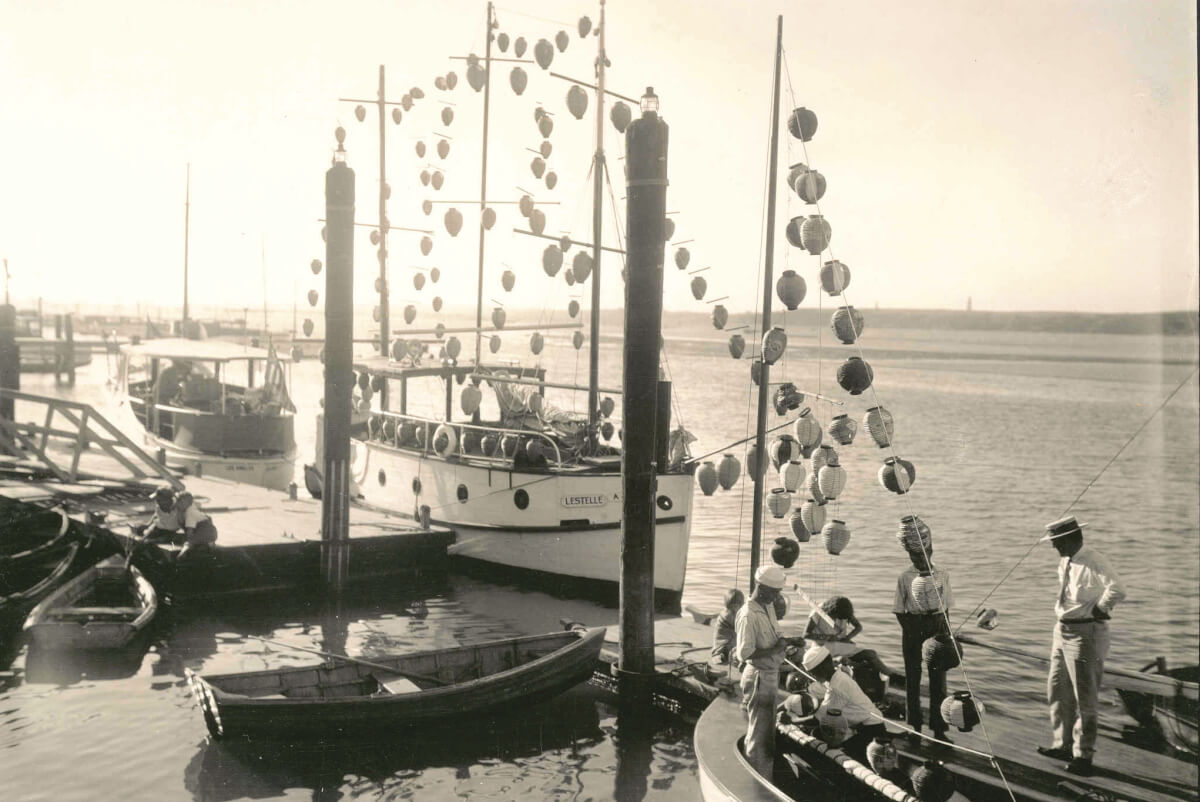
A larger parade followed in 1914, and the July Fourth celebration in 1915 attracted an even greater turnout. Historians estimate that as many as 40 launches, canoes, and rowboats participated, with thousands of visitors watching from shore.
The spectacle included a derelict boat hull set ablaze, a staged passenger rescue, a “Battle of Fireworks” between two launches, and the explosion of two underwater mines. These dramatic—and hazardous—displays marked an unforgettable chapter in the parade’s early history.
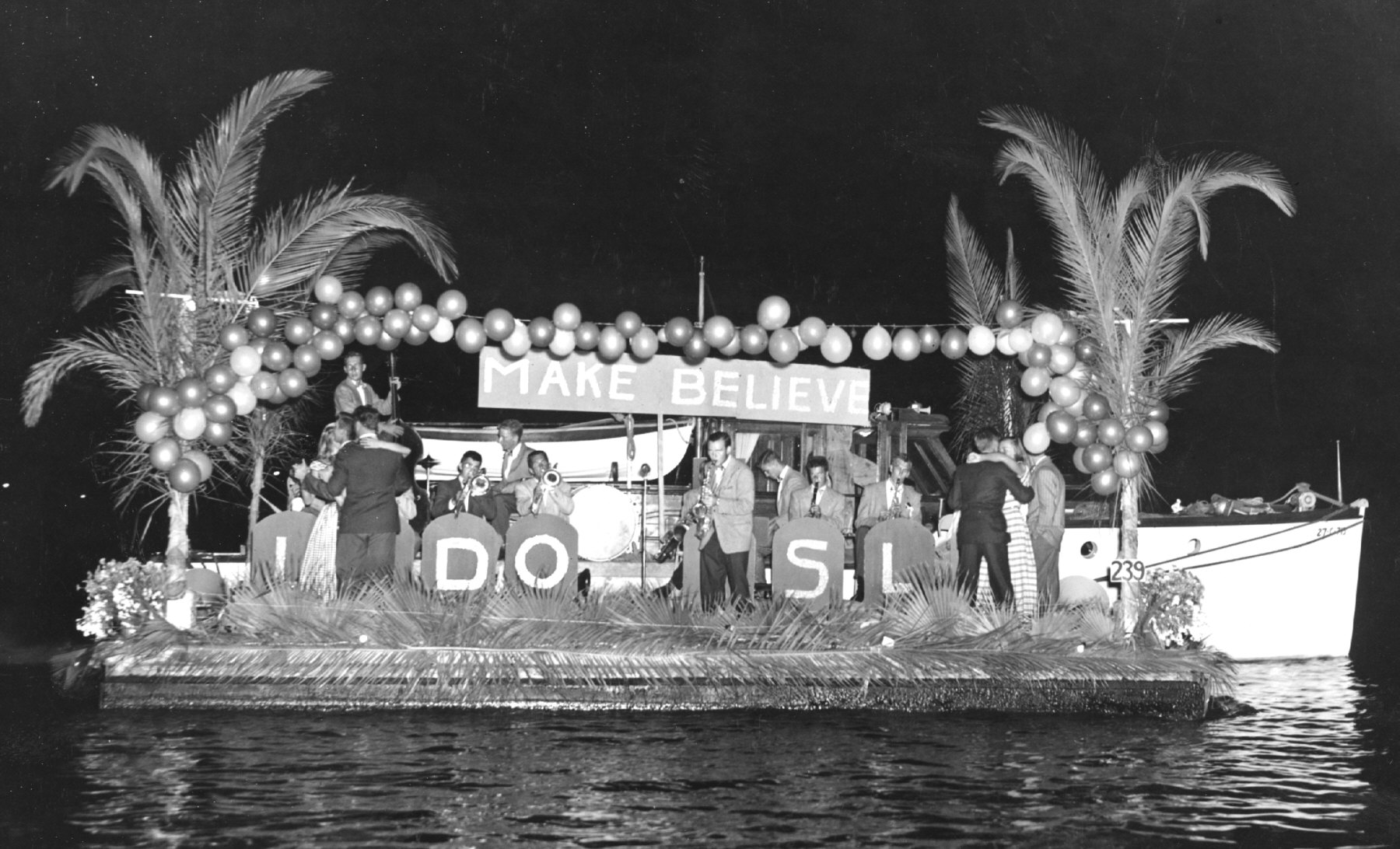
Following the 1915 celebration, the parade entered a period of interruption. World War I and a severe economic downturn in Newport Harbor brought the growing tradition to a halt.
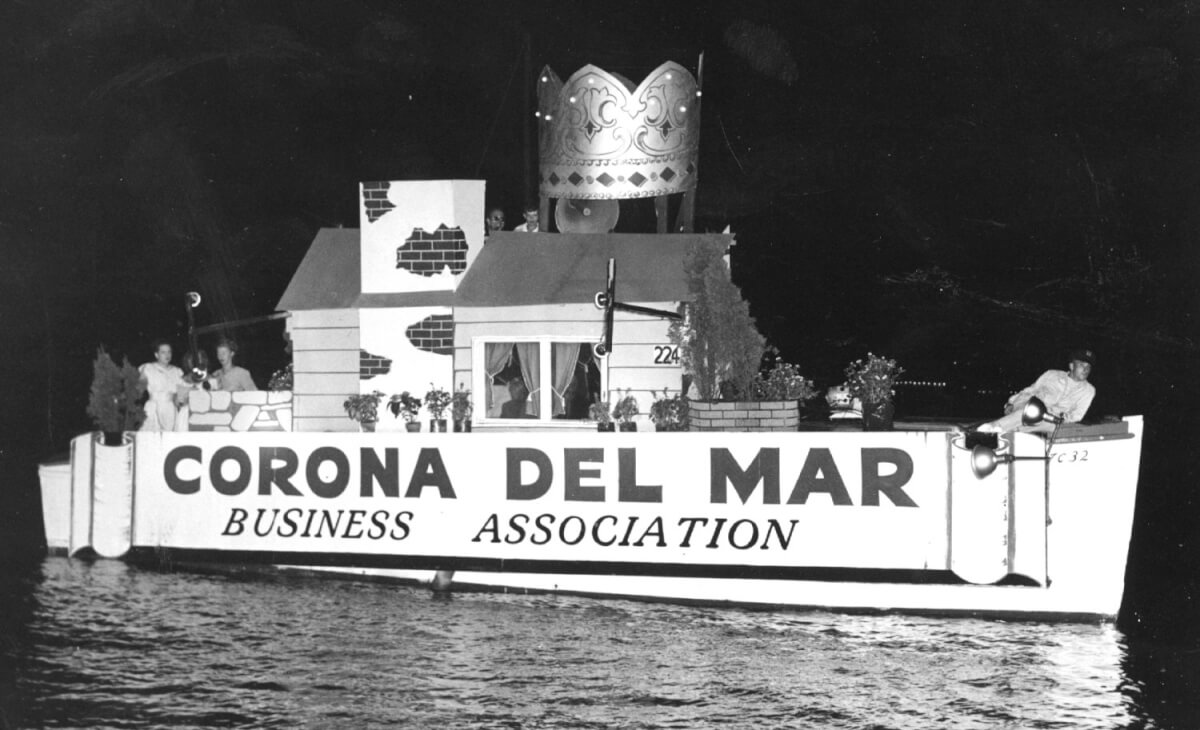
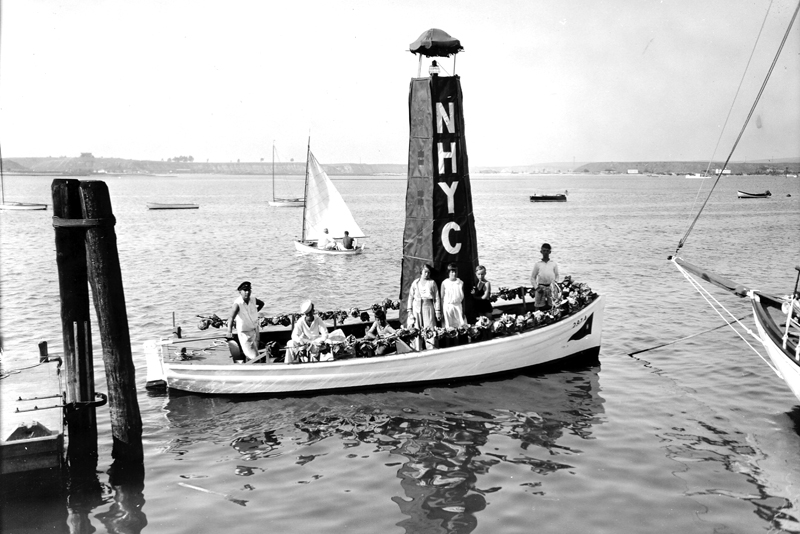
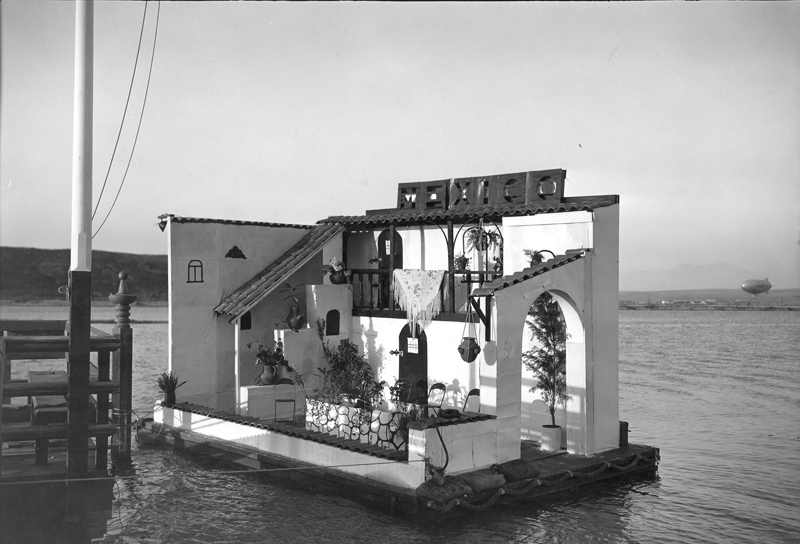
In 1919, Joseph Beek helped bring the lighted boat parade back to Newport Harbor. A key figure in the development of Balboa Island, Beacon Bay, and the Balboa Ferry Line, Beek became a driving force behind the celebration known as the Tournament of Lights.
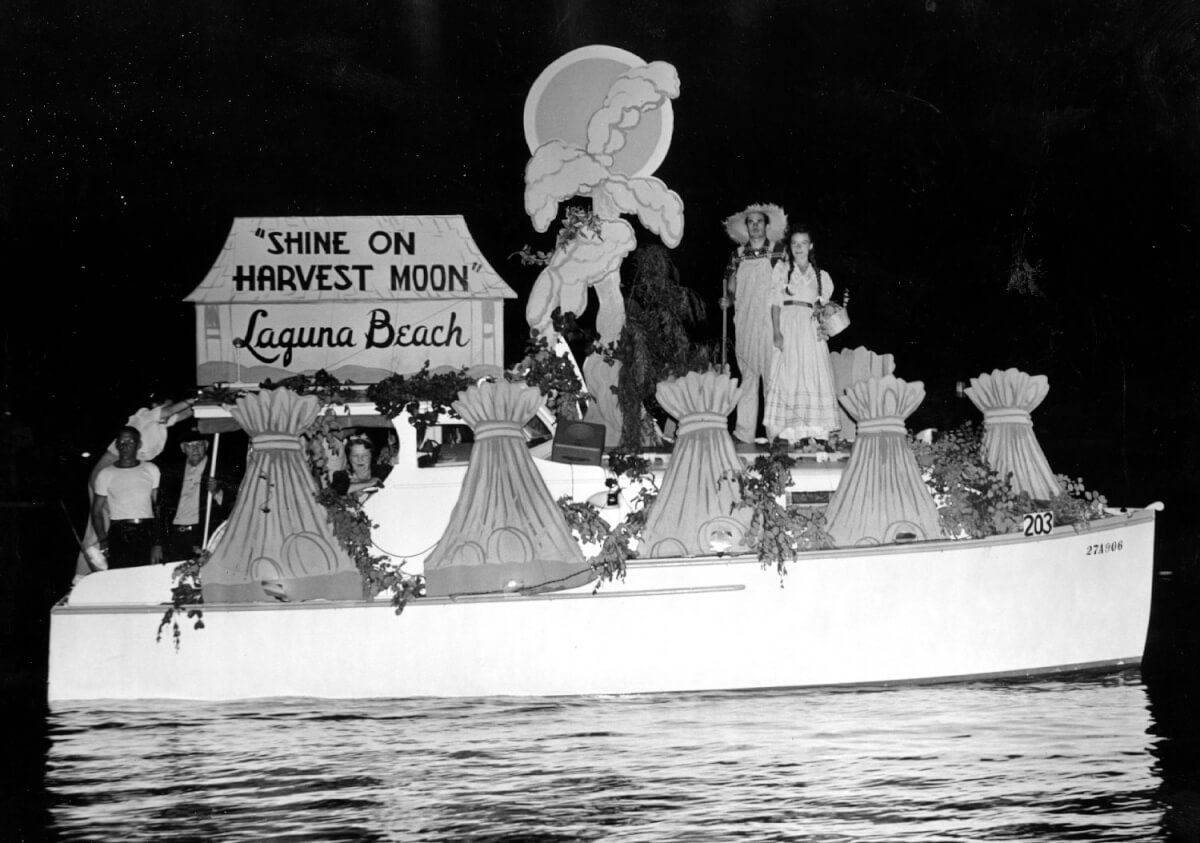
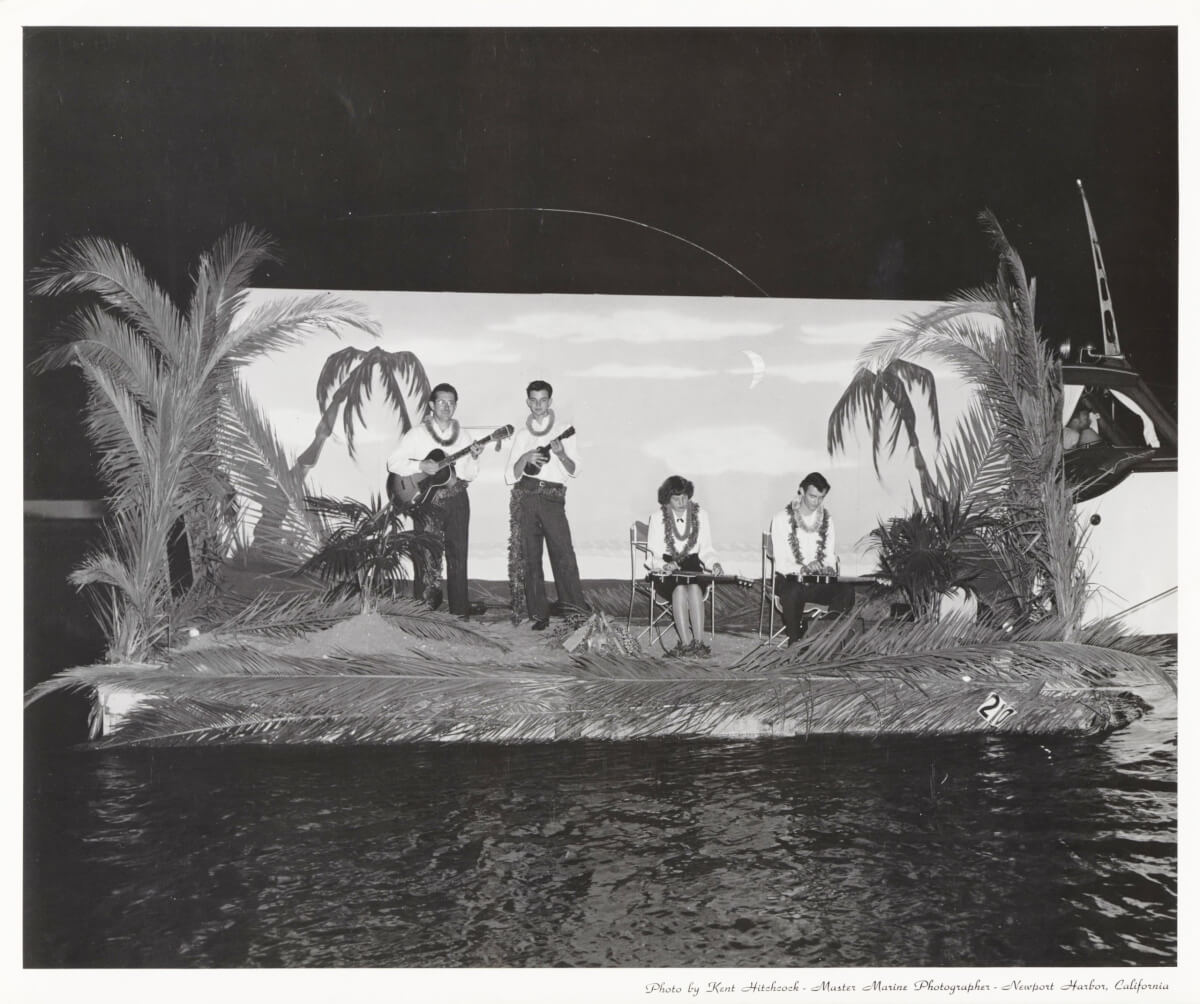
Many early participants were children who decorated floats built in Beek’s garage. Often inspired by entries in Pasadena’s Tournament of Roses Parade, these creations were towed around the harbor for spectators to enjoy.
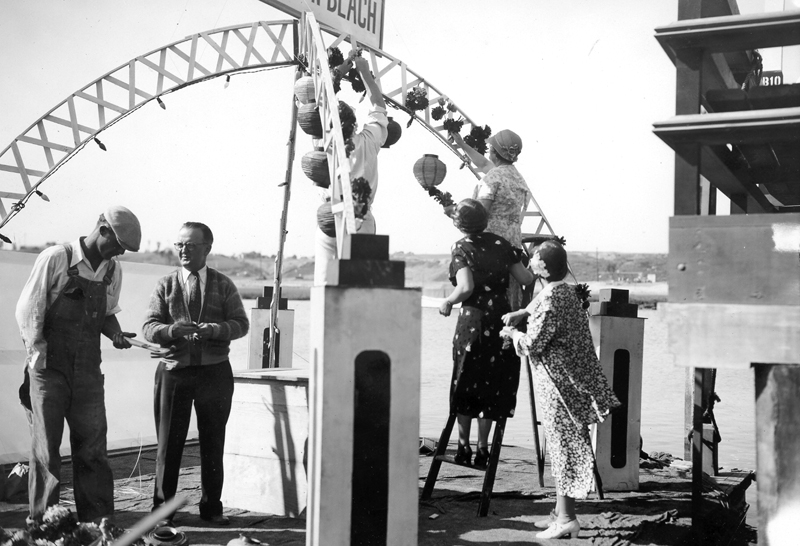
The Tournament of Lights became a recurring summer celebration, bringing illuminated boats and imaginative floats to Newport Harbor. With the exception of several years during World War II, the event continued to delight residents and visitors.
During the 1946 holiday season, Newport Beach City employees decorated a barge with a lighted Christmas tree. As the barge was towed around the harbor, passengers sang Christmas carols to residents along the shore.
This festive outing laid the foundation for the parade’s transformation from a summer celebration into a Christmas tradition.
By 1949, the Tournament of Lights had become so popular that city leaders expressed concerns about large crowds and traffic congestion around the harbor. The summer event fell out of favor, bringing that chapter of the parade’s history to a close.
The floating Christmas tree celebration, however, offered a new path forward.
The Beek family once again helped carry the tradition forward by providing a ferryboat for the floating Christmas tree celebration. Gradually, other decorated boats began following the city employees’ illuminated tree around the harbor.
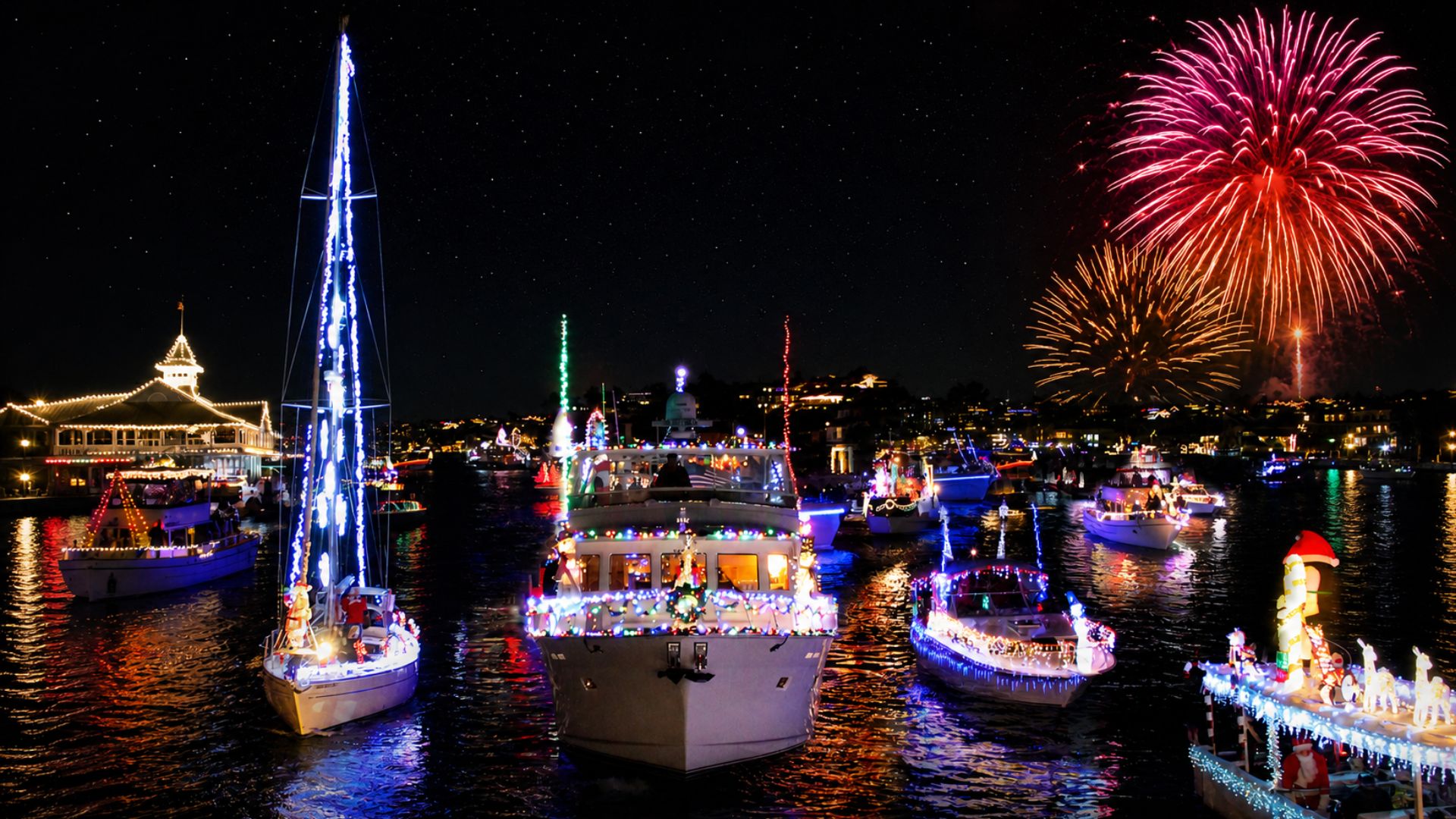
As participation grew, the spirit of the Tournament of Lights returned in a new season, evolving into the Newport Beach Christmas Boat Parade.
The Beek family once again helped carry the tradition forward by providing a ferryboat for the floating Christmas tree celebration. Gradually, other decorated boats began following the city employees’ illuminated tree around the harbor.
As participation grew, the spirit of the Tournament of Lights returned in a new season, evolving into the Newport Beach Christmas Boat Parade.